Steady State Health | 4 Min Read

If you’ve been doing all the “right” things — eating less, exercising more, tracking calories — and your weight still won’t budge (or your energy, mood, and sleep are worse), let’s get one thing straight:
This is not a willpower problem.
It’s a biology problem — and outdated advice.
The “eat less, move more” mantra was never designed for the hormonal, metabolic reality of midlife women. And continuing to follow it often does more harm than good.
Let’s break down why this advice backfires — and what actually works instead.
Why This Advice Backfires

1. It Treats Weight Like a Simple Math Equation (It’s Not)
The calories-in, calories-out model assumes your body burns calories the same way every day, regardless of stress, hormones, sleep, or age.
In reality, your body adapts.
When you consistently eat less:
- Your resting metabolic rate can slow
- Your body becomes more energy-efficient (burns fewer calories for the same tasks)
- Hunger hormones increase, making restriction harder
This process — called metabolic adaptation — is one reason dieting works short-term but fails long-term, especially in midlife women (Mitri & Young, 2024).
2. It Ignores Hormonal Shifts in Perimenopause & Menopause
As estrogen declines and fluctuates:
- Muscle mass decreases more easily
- Insulin sensitivity worsens
- Fat storage shifts toward the abdomen
- Stress hormones (like cortisol) have a stronger impact
So when a midlife woman “eats less,” her body doesn’t say “Great, let’s burn fat.”
It often says “Uh-oh, resources are scarce — better conserve energy and store fat.”
That’s not failure. That’s physiology doing its job.

3. It Encourages Chronic Undereating (Which Slows Fat Loss)
Many women in midlife are already under-fueling — skipping meals, eating tiny portions, or white-knuckling through hunger.
Chronic undereating can:
- Suppress thyroid signaling
- Increase cortisol
- Disrupt blood sugar regulation
- Worsen fatigue, cravings, and sleep
Ironically, eating too little can make weight loss harder, not easier — especially when hormones are already in flux (Mitri & Young, 2024).
4. It Pushes More Exercise Without Recovery
“Move more” often turns into:
- More HIIT
- More cardio
- More intensity
- Less recovery
For stressed, under-fueled midlife women, this can:
- Spike cortisol
- Increase inflammation
- Promote muscle loss instead of fat loss

Exercise is powerful — but too much, without proper fuel and recovery, can stall progress.
5. It Focuses on Willpower Instead of Systems
This advice quietly implies:
“If this isn’t working, you’re just not trying hard enough.”
That mindset keeps women stuck in shame, self-blame, and diet cycling — instead of addressing the real drivers:
- Hormones
- Metabolism
- Sleep
- Stress
- Nutrient needs
What Actually Works (and Why)

This is where the shift happens — from fighting your body to working with it.
✔ Focus on Metabolic Health (Not Just Weight)
Weight is a lagging indicator. Metabolic health is the foundation.
Supporting metabolism means:
- Stabilizing blood sugar
- Reducing chronic stress
- Preserving muscle
- Supporting thyroid and hormone function
When metabolism improves, weight often follows — without extreme restriction.
✔ Eat Enough — Especially Protein
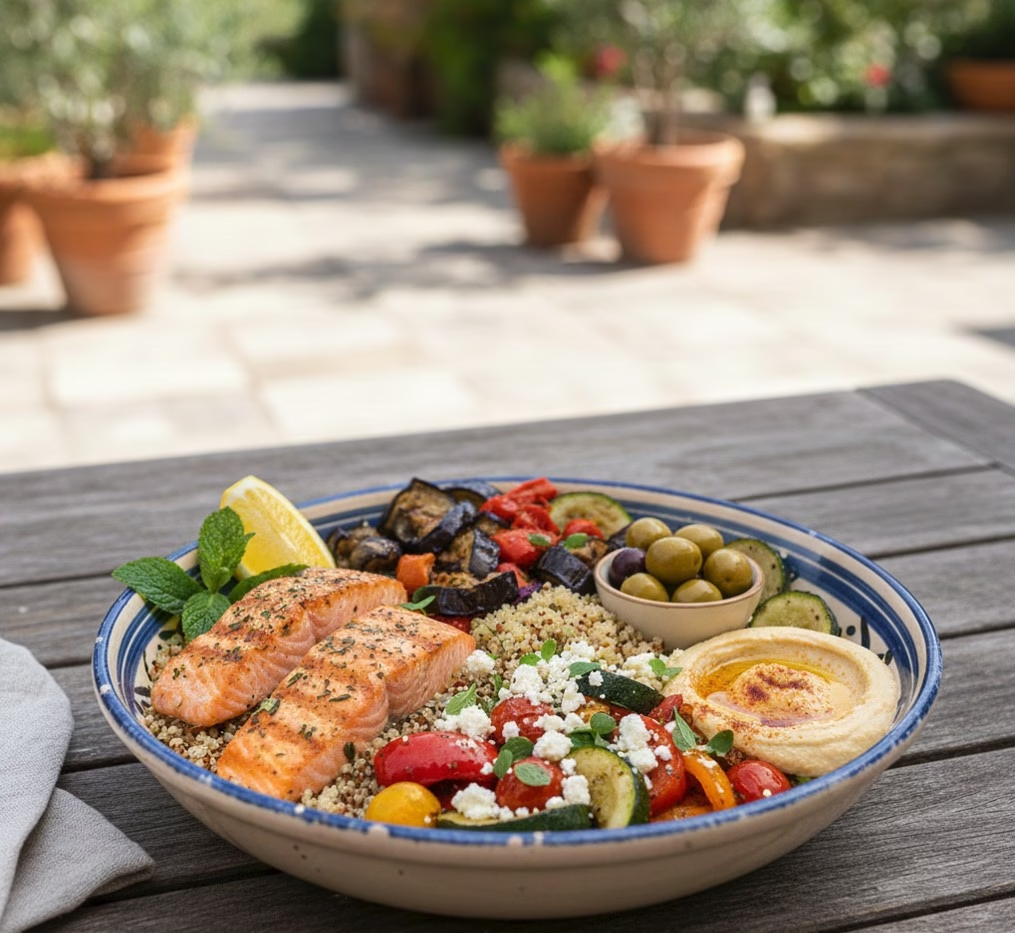
Protein is critical in midlife because it:
- Preserves lean muscle
- Improves satiety
- Supports blood sugar balance
- Increases the thermic effect of food
Most midlife women need more protein, not less food — especially earlier in the day.
✔ Strength Training Is Non-Negotiable
Muscle is not about aesthetics — it’s about:
- Higher resting metabolic rate
- Better insulin sensitivity
- Stronger bones
- Long-term independence
Strength training sends a powerful signal to your body:
“We need this tissue — don’t slow metabolism.”
✔ Cardio With Intention, Not Punishment
Walking, zone-2 cardio, and movement you enjoy:
- Improve insulin sensitivity
- Reduce stress
- Support cardiovascular health
More isn’t always better — better is better.
✔ Stress & Sleep Are Metabolic Tools
Poor sleep and chronic stress:
- Increase hunger hormones
- Reduce insulin sensitivity
- Promote fat storage
Sleep and stress management aren’t “extras.”
They are core metabolic interventions.
✔ Personalized, Hormone-Aware Care
Midlife bodies aren’t broken — they’re changing.
That means:
- Different calorie needs
- Different recovery needs
- Different hormone considerations
- Different timelines
Cookie-cutter advice doesn’t work here. Individualized care does.
✨ Bottom Line
If “eat less, move more” worked for midlife women, you wouldn’t be here.
The problem isn’t you — it’s advice that ignores female physiology, hormonal transitions, and metabolic adaptation. Sustainable results come from fueling your body, protecting muscle, supporting hormones, and reducing stress — not from constant restriction.

If you’re tired of:
- Doing “all the right things” with no results
- Feeling blamed by outdated advice
- Fighting a body that feels unfamiliar
You don’t need more discipline — you need a plan that actually matches your biology.
At Steady State Health, we help midlife women:
- Understand what their labs really mean
- Support hormones and metabolism together
- Build sustainable nutrition and movement strategies
- Stop dieting — and start feeling strong again
???? Book a consult and let’s create a plan that works with your body — not against it.
GET IN TOUCH
Reference (APA 7th Edition)
Mitri, M. S., R.D., & Young, L. R., Ph.D., R.D. (2024, December 26). Why “Eat Less, Move More” doesn’t actually work for weight loss, according to dietitians. EatingWell.
https://www.eatingwell.com/why-eat-less-move-more-doesnt-work-for-weight-loss-8763100